Hospitals operate in one of the most demanding environments imaginable. With hundreds of staff members moving across sprawling facilities every hour, knowing exactly where your team is, who is available, and whether shifts are properly covered can mean the difference between a timely emergency response and a critical delay. This is precisely where hospital staff tracking steps in as a game-changing solution for modern healthcare institutions. These systems give healthcare administrators real-time visibility into staff availability, attendance, and location, enabling faster emergency response and better patient outcomes.
The healthcare industry is undergoing a digital revolution. From electronic health records to telemedicine platforms, technology is reshaping how care is delivered. Yet one area that has seen explosive growth in recent years is hospital staff tracking, which now goes far beyond manual check-ins and paper schedules. Modern cloud-based workforce management software monitors staff attendance, shift coverage, work output, and field locations, turning raw workforce data into actionable insights.
By turning raw workforce data into actionable insights, hospital staff tracking helps administrators identify staffing gaps instantly, coordinate emergency teams within seconds, and maintain continuous oversight of high-risk departments. According to a comprehensive research article published by the National Institutes of Health (NIH), real-time workforce visibility systems are now recognized as essential tools for managing hospital services effectively. Whether you manage a community hospital, a psychiatric institution, or a long-term care center, understanding how this technology works is essential for staying competitive in 2026 and beyond.
What Is Hospital Staff Tracking and Why Does It Matter?
Hospital staff tracking refers to the use of digital technologies including cloud-based employee monitoring software, mobile GPS tracking, automated attendance systems, and HR management platforms to monitor the real-time availability, location, and productivity of doctors, nurses, administrators, and support staff. Unlike legacy hardware-based solutions, modern software-driven tracking works through the devices your team already uses: computers, tablets, and smartphones.
The data collected feeds into a centralized dashboard that administrators can access from desktops or mobile devices. This gives hospital management instant visibility into who is on shift, who is present, which departments are understaffed, and how productively computer-based tasks are being completed. When an emergency strikes, knowing the live attendance and availability status of each qualified team member eliminates the dangerous lag time associated with manual searches and phone calls.
7 Proven Ways Hospital Staff Tracking Transforms Healthcare Operations
1. Faster Emergency Response Times
In critical situations such as cardiac arrests, strokes, or trauma cases, every second counts. Hospital staff tracking software enables administrators to instantly see which physicians, nurses, or specialists are currently clocked in, active at their workstations, or available on the floor. Instead of relying on overhead paging systems that disrupt the entire facility, managers get a live view of staff availability and can dispatch the right person immediately. Studies consistently show that reducing emergency response times by even a few minutes can dramatically improve patient survival rates.
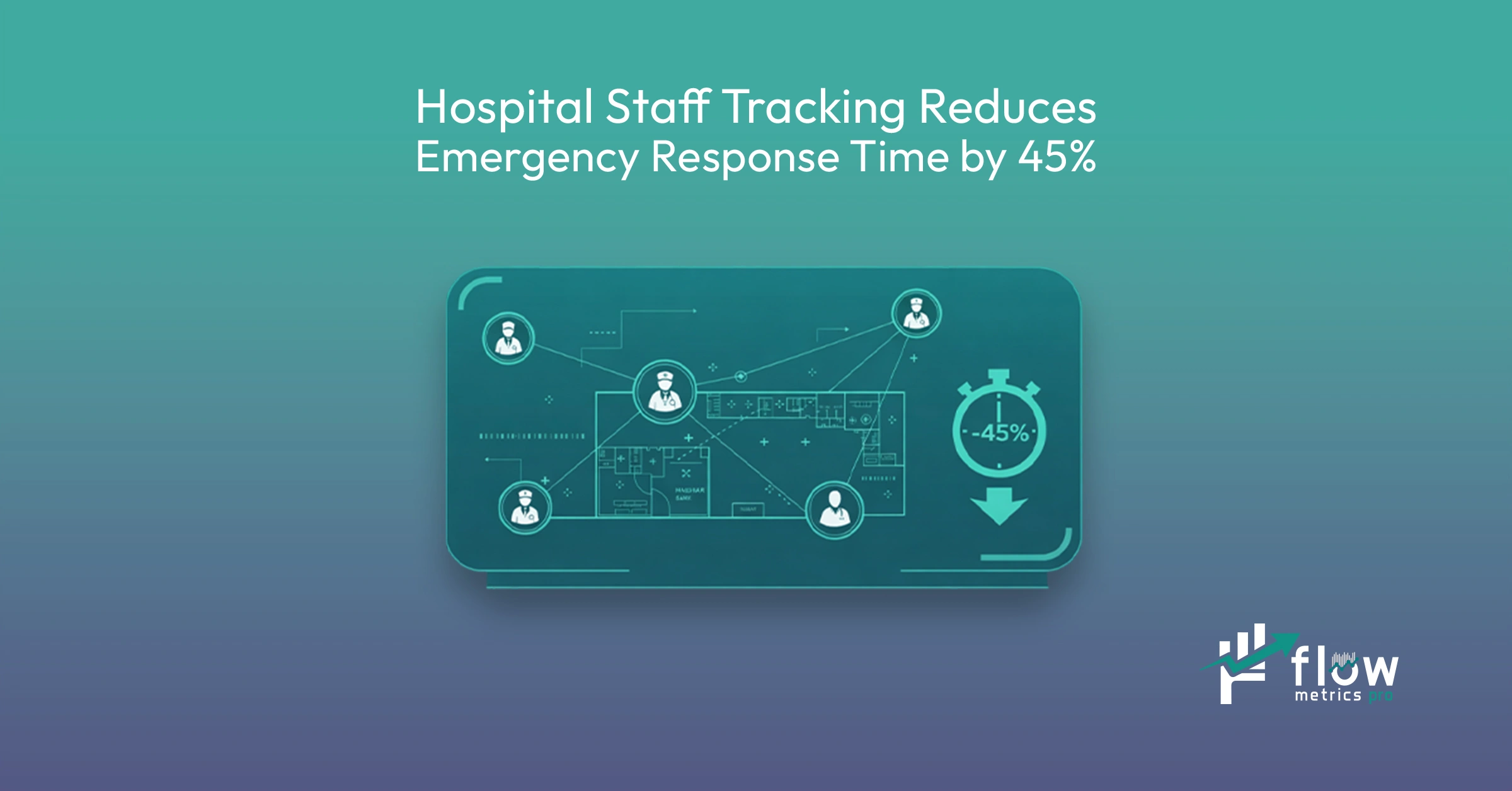
The impact is backed by real-world results. Facilities that have moved to real-time workforce visibility systems have reported emergency response time reductions of up to 45 percent, based on documented workforce visibility deployments across multiple healthcare facilities. According to workforce management research published by the National Institutes of Health, real-time visibility systems directly reduce response delays caused by manual check-ins and miscommunication. Healthcare labor costs account for nearly 60 percent of total hospital expenditures, making automated staff visibility not just an operational advantage but a financial necessity. When nurses and administrators spend up to 30 percent of their shift managing attendance discrepancies or locating available colleagues, automated staff tracking directly reclaims that lost time for actual patient care.
2. Optimized Staffing and Resource Allocation
One of the biggest operational challenges hospitals face is ensuring the right number of staff members are available in the right departments at the right time. With automated attendance and shift management, managers can visualize staffing levels across all floors and departments simultaneously. Leave management integration means administrators always know in advance when staff will be absent, allowing proactive scheduling adjustments before gaps become emergencies. When combined with workforce analytics, these data points become powerful tools for long-term scheduling improvements, reducing both overstaffing costs and dangerous coverage gaps.
3. Automated Attendance and Compliance Tracking
This is one of the most direct and measurable benefits of modern hospital staff tracking software. Automated systems eliminate the need for manual check-in processes entirely. The platform registers when a staff member logs in, begins work, takes breaks, and ends their shift, creating an audit-ready digital record without any administrative burden.
This automation streamlines payroll processing, ensures accurate work-hour records, and supports compliance with healthcare labor regulations. For facilities that require documentation of staff presence during specific care hours, automated logs provide immediate, verifiable records. The HHS HIPAA guidelines set strict standards for how employee and patient data must be handled, and a well-configured HR management system is built with exactly these compliance requirements in mind.
4. Enhanced Patient Safety Through Consistent Shift Coverage
Patient safety lies at the heart of every healthcare institution. Software-based hospital staff tracking directly contributes to better patient outcomes by ensuring that qualified caregivers are always properly scheduled and accounted for. When attendance data is automated and shift coverage is monitored in real time, administrators can identify and address dangerous understaffing situations before they impact care quality.
In psychiatric facilities and senior care centers, consistent staff-to-patient ratios are not just best practice but a regulatory requirement. Automated attendance tracking ensures no shift goes uncovered without timely intervention. Organizations focused on improving team performance metrics find that real-time visibility into staff availability leads to measurable quality improvements across departments.
5. GPS Tracking for Mobile and Field-Based Hospital Staff
Not all hospital workforce management happens within four walls. Home health nurses, field care coordinators, patient transport staff, and community health workers operate across wide geographic areas every day. With mobile phone-based GPS tracking, staff simply log in through their smartphone and hospital administrators can instantly monitor their live location, verify visit completions, and coordinate dispatch efficiently — all without requiring any additional hardware or wearable devices.
According to OSHA’s healthcare workplace violence report, the rate of serious violent incidents in healthcare is more than four times greater than in private industry on average. For field-based staff working alone in community settings, GPS location visibility through their mobile login adds an important layer of safety oversight. Administrators can see exactly where each field staff member is at any given moment, enabling faster emergency coordination and stronger duty-of-care practices without requiring any specialist equipment.
6. Computer Activity Monitoring and Productivity Analytics
Beyond attendance and location, modern hospital staff tracking platforms monitor the work output of computer-based staff: administrators, billing teams, scheduling coordinators, and clinical support roles. Productivity monitoring captures active work time, application usage, task completion rates, and workflow patterns, giving managers objective data on how efficiently hospital operations are running.
FlowMetricsPro also includes screenshot monitoring, which captures periodic snapshots of staff workstations during active sessions. For hospital administrators overseeing large administrative and billing teams, this provides an objective, timestamped record of work activity without requiring invasive surveillance. Screenshots serve as verifiable proof of work, support compliance audits, and help resolve disputes around task completion. Many healthcare organizations find this feature particularly valuable when managing remote administrative staff or outsourced billing teams where direct supervision is limited.
As more hospital functions move to digital workflows, understanding how productively those workflows are being executed becomes essential. Heat maps of activity patterns help administrators identify bottlenecks in administrative processes, optimize team layouts, and make evidence-based decisions about staffing and workflow design.
7. Unified HR, Payroll, and Workforce Management
Today’s hospital staff tracking solutions are designed to unify every dimension of workforce management in a single platform. Attendance records feed directly into payroll processing. Leave and scheduling data integrates with shift planning. Productivity insights connect to performance reviews and HR records. This interoperability means that workforce data automatically triggers the right administrative workflows, eliminating redundant manual processes.
Hospitals are increasingly moving toward single-platform workforce management systems that unify staff oversight, compliance tracking, and operational analytics. The global healthcare workforce management software market is projected to grow from USD 2.2 billion in 2024 to USD 7.7 billion by 2034, reflecting the rapid shift toward integrated digital workforce platforms. Platforms like FlowMetricsPro deliver exactly this kind of end-to-end integration, allowing clinical and administrative leadership to focus entirely on patient care rather than workforce administration.
How to Choose the Right Hospital Staff Tracking Solution
Selecting the right workforce tracking system for your hospital requires careful evaluation of several factors. First, consider the size and complexity of your organization. A multi-site healthcare network will need a more robust platform than a single-floor clinic. Second, evaluate the specific tracking needs of your workforce. Computer-based staff benefit most from productivity monitoring and automated attendance, while field nurses and mobile care workers need GPS location capabilities via their smartphones.
Third, prioritize solutions that offer cloud-based dashboards accessible from mobile devices, enabling administrators to monitor operations from anywhere. Fourth, ensure the system complies with healthcare data privacy regulations. The HHS HIPAA guidelines set strict standards for how employee and patient data must be handled, and any tracking solution must align fully with these requirements. Finally, look for vendors that provide comprehensive payroll integration, leave management, and compliance reporting as part of a unified HRMS platform. Transparency, data security, and respect for employee privacy must guide every decision.
The Future of Hospital Staff Tracking
The evolution of hospital staff tracking is accelerating rapidly. Artificial intelligence and machine learning are being integrated into workforce management platforms to predict staffing needs, detect attendance anomalies, and recommend proactive scheduling interventions. Predictive analytics engines can anticipate patient surges based on historical data and automatically suggest shift adjustments before understaffing becomes critical.
The Joint Commission’s workplace violence prevention standards are also pushing hospitals toward adopting comprehensive safety and compliance systems, and integrated HR and workforce tracking platforms are emerging as a key component of meeting these standards. Platforms like FlowMetricsPro are leading the conversation about how healthcare organizations can ethically and effectively monitor workforce activity while maintaining trust and transparency. As hospital staff tracking matures, we can expect deeper integration with scheduling engines, payroll systems, and compliance frameworks that make hospital operations truly data-driven.
Frequently Asked Questions About Hospital Staff Tracking Software
Hospital staff tracking software is a digital platform that monitors the real-time location, attendance, and work activity of healthcare personnel — including clinical staff, administrative teams, and field workers. Modern systems work through smartphones and computers your team already uses, with no specialist hardware required. Data feeds into a centralized dashboard giving administrators live visibility into shift coverage, staff availability, and workforce productivity. Platforms like FlowMetrics Pro combine attendance, GPS, payroll, and HR in one unified system.
To track hospital staff, use a cloud-based workforce platform that runs on smartphones and computers your team already uses. Staff log in at shift start, and the system captures attendance, location, and work activity in real time on an administrator dashboard. This eliminates manual check-ins, paper timesheets, and the need to install specialized hardware. FlowMetrics Pro covers both clinical and administrative staff under one platform, with role-based dashboards for each team.
Live location tracking works through a mobile app installed on each staff member's smartphone. Once a staff member logs in at shift start, their GPS location transmits to an administrator dashboard in real time. Administrators can view all active staff on a live map, set up geofenced zones around hospital buildings or coverage areas, and receive automatic alerts when staff enter or leave designated zones. Location tracking is active only during logged work sessions — not before clock-in or after clock-out.
The best app for tracking hospital staff is one that covers attendance, GPS location, computer activity, payroll, and HR in a single platform. Standalone time trackers work for simple clock-in needs but typically require separate tools for payroll, leave, and compliance — creating data silos and manual reconciliation work. For healthcare organizations, prioritize apps with HIPAA-aligned data handling, mobile GPS support, multi-site management, and built-in payroll integration. FlowMetrics Pro was purpose-built to handle this unified workflow for hospitals and care networks.
Free time trackers exist, but most are built for small general-purpose teams and lack the features healthcare organizations need — geofencing, multi-site support, payroll integration, HIPAA-aligned data handling, and role-based access controls. For hospitals, free tools often become expensive in hidden ways: manual payroll reconciliation, compliance gaps, and no support for field-based staff. FlowMetrics Pro offers a 14-day free trial so you can evaluate a healthcare-ready platform with full functionality before committing.
Hospital staff work and productivity are tracked through a combination of attendance logs, active work time, application and task usage, shift coverage data, and task completion rates. For computer-based staff in administration and billing, periodic screenshot monitoring provides timestamped, objective records of work activity. Managers see productivity patterns on a dashboard, making it easier to identify bottlenecks, rebalance workloads, and support overloaded staff. This data-driven approach replaces guesswork with evidence, without invasive or always-on surveillance.
Yes, staff tracking is generally permitted in healthcare settings when implemented transparently and in compliance with employment law and data privacy regulations. Employers may monitor work activity, attendance, and location during working hours, provided employees are informed of what is tracked and how data is used. In the United States, healthcare organizations should align monitoring practices with state employment laws and HIPAA data handling requirements. This is general guidance, not legal advice — consult your legal counsel before deploying any tracking system.
GPS tracking for hospital staff works through a mobile app installed on the staff member's smartphone. When a staff member logs in at the start of their shift, the app captures their GPS location and transmits it to the administrator dashboard in real time. Geofencing allows administrators to define zones — such as hospital buildings, wards, or geographic coverage areas — and receive alerts when staff enter or leave those zones. GPS tracking is active during logged work sessions only, not outside working hours.
Yes, hospital staff tracking data should always be encrypted, access-controlled, and handled in line with HIPAA standards. FlowMetrics Pro encrypts all data in transit and at rest, uses role-based permissions, and logs administrator actions for audit purposes. A Business Associate Agreement (BAA) is available for organizations that require it. Staff tracking data is kept separate from patient health information and never shared with third parties.
Yes, modern hospital staff tracking software integrates directly with payroll. Attendance records, shift data, overtime calculations, and leave management feed automatically into payroll processing, eliminating manual timesheet reconciliation. This unified flow is one of FlowMetrics Pro's core differentiators versus standalone tracking tools that require separate payroll software and manual data synchronization. For hospitals managing hundreds of staff across departments, integrated payroll cuts hours of admin work per pay cycle.
RTLS (Real-Time Locating Systems) are hardware-based systems using RFID badges, BLE beacons, or fixed sensors to track staff location passively without requiring active check-in. They deliver precise indoor positioning but require significant infrastructure investment and long deployment timelines. Software-based platforms like FlowMetrics Pro track staff through smartphone GPS and PC login activity, covering both on-site and field-based staff without hardware. The right choice depends on whether your priority is passive indoor tracking at room level, or operational workforce management including attendance, productivity, HR, and payroll across a mixed workforce.
Yes, FlowMetrics Pro is designed for multi-site deployment. Administrators can manage staff across multiple hospitals, clinics, or satellite facilities from a single dashboard, with geofences and attendance zones configured per site. Adding new facilities requires no hardware procurement — simply configure the new location in the platform and staff can begin logging in immediately. This makes it practical for hospital networks expanding into new regions or adding outpatient clinics without capital infrastructure costs.
Most hospitals are operational on software-based staff tracking within a few days to two weeks. Because platforms like FlowMetrics Pro require no hardware installation, deployment involves platform configuration, staff onboarding to the mobile app or desktop client, and geofence setup. This compares with hardware RTLS implementations that typically take three to six months from procurement to go-live — a critical difference for hospitals under pressure to improve workforce visibility quickly.
Conclusion
Hospital staff tracking is no longer a futuristic concept. It is a practical, proven approach that is transforming how healthcare facilities manage their most critical asset: their people. From automated attendance and shift management to GPS tracking for field staff and computer productivity monitoring for administrative teams, the benefits of modern workforce tracking software are both immediate and far-reaching.
As healthcare costs continue to rise and patient expectations grow, investing in a robust hospital staff tracking system is not just a smart operational decision but a critical step toward delivering the quality of care that every patient deserves. Whether you are managing a large teaching hospital or a specialized care center, the time to embrace this technology is now. Evaluate your options, prioritize transparency and privacy, and choose a solution that scales with your organization’s evolving needs.